[03/14] Case study
MyUS
The project
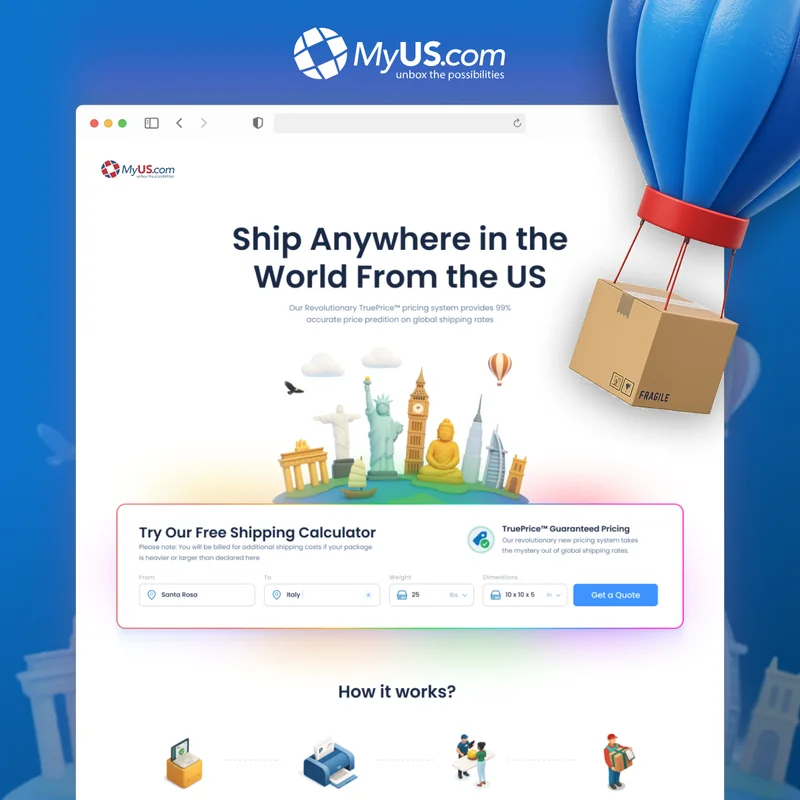
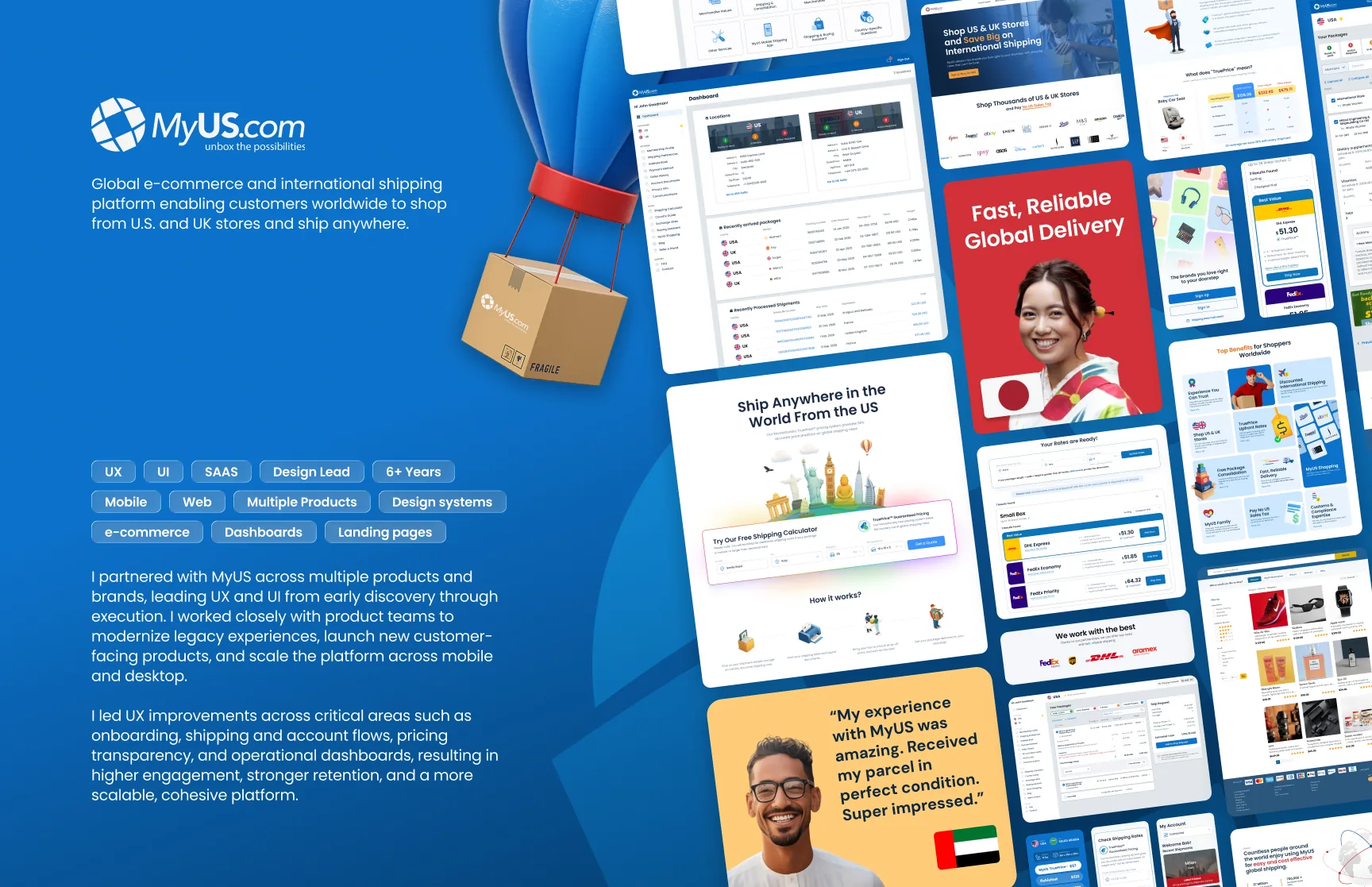
MyUS is a global e-commerce and international shipping platform. Customers anywhere in the world get a US or UK address, shop from stores there, and have their purchases consolidated and shipped home. The platform spans several products and brands, on mobile and desktop, from the customer-facing shipping experience to marketing sites and operational dashboards.
Our role
Flowform served as design lead for UX and UI across multiple MyUS products and brands over more than six years, working closely with product teams from early discovery through execution.
The problem
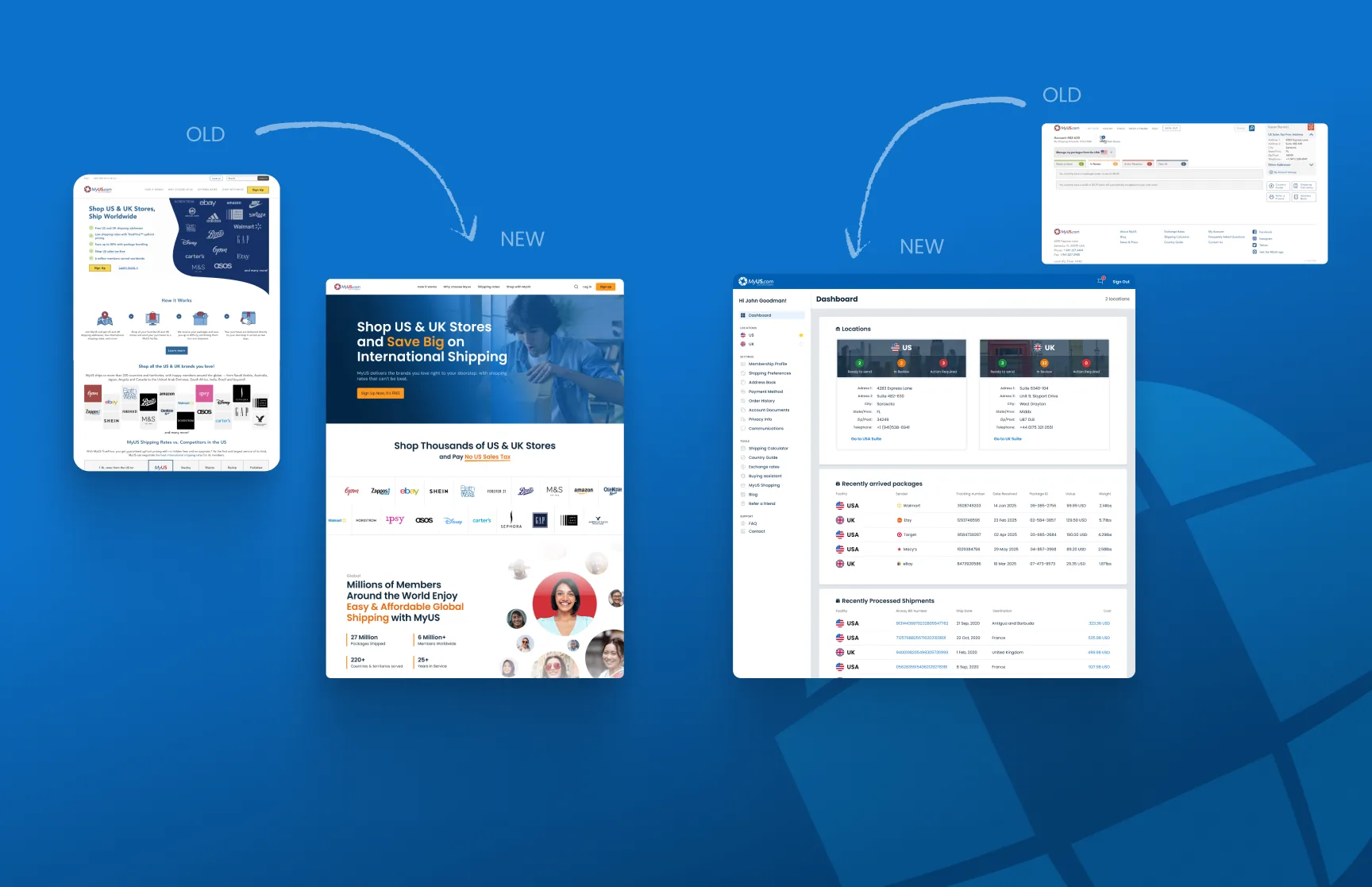
Much of the platform had grown up as legacy experiences, built at different times with different conventions. Flows for onboarding, shipping, and account management were harder than they needed to be, pricing was not always clear to customers, and each brand and product had drifted toward its own look, which slowed both design and development and made the whole platform feel less than one thing.
What we did
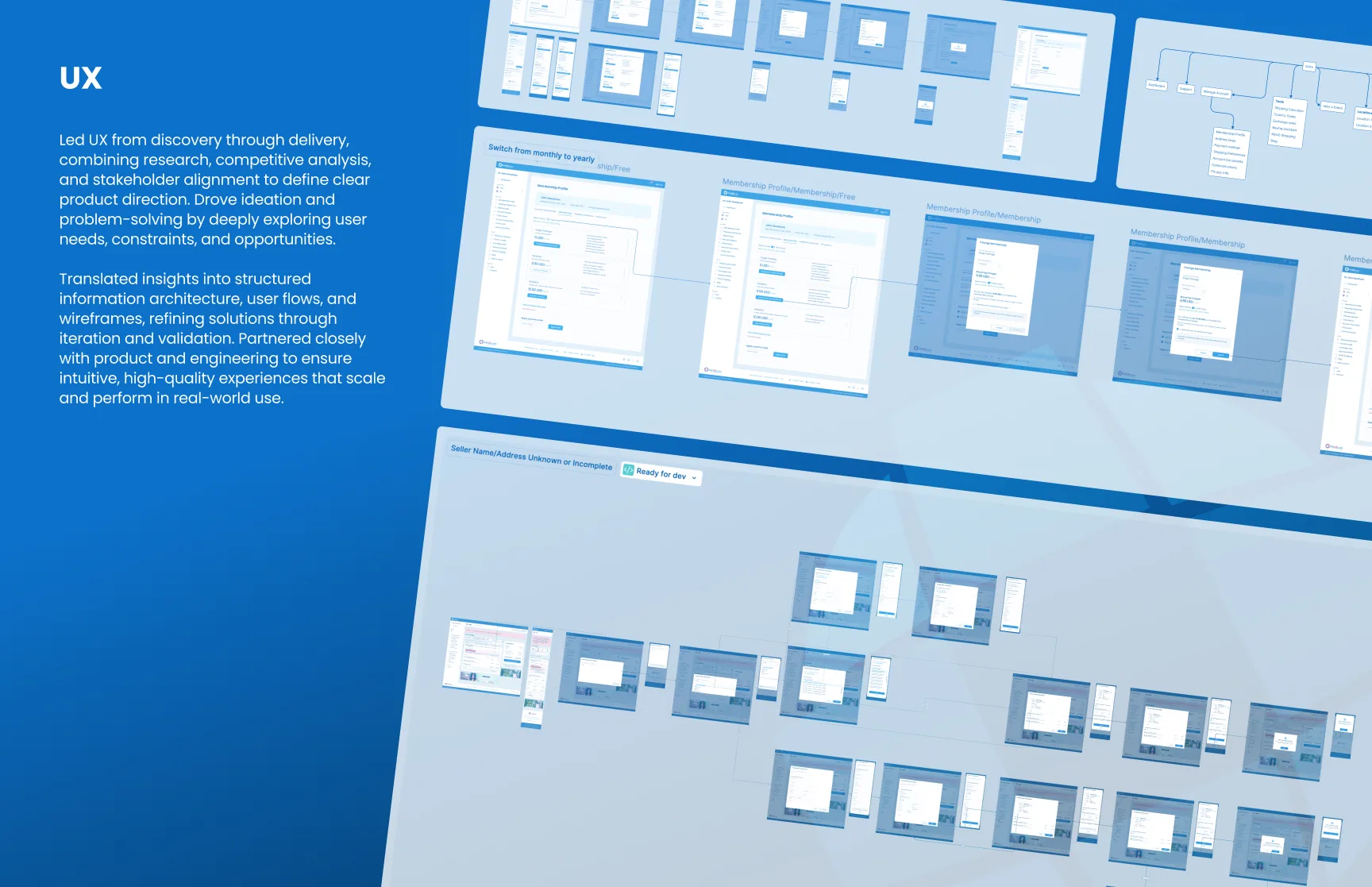
We led UX from discovery through delivery, combining research, competitive analysis, and stakeholder alignment to set clear product direction, then translated the insights into structured information architecture, user flows, and wireframes, refined through iteration and validation with product and engineering.
We redesigned the critical areas of the customer experience: onboarding, shipping and account flows, pricing transparency, and the operational dashboards behind them, while launching new customer-facing products alongside the modernization work.
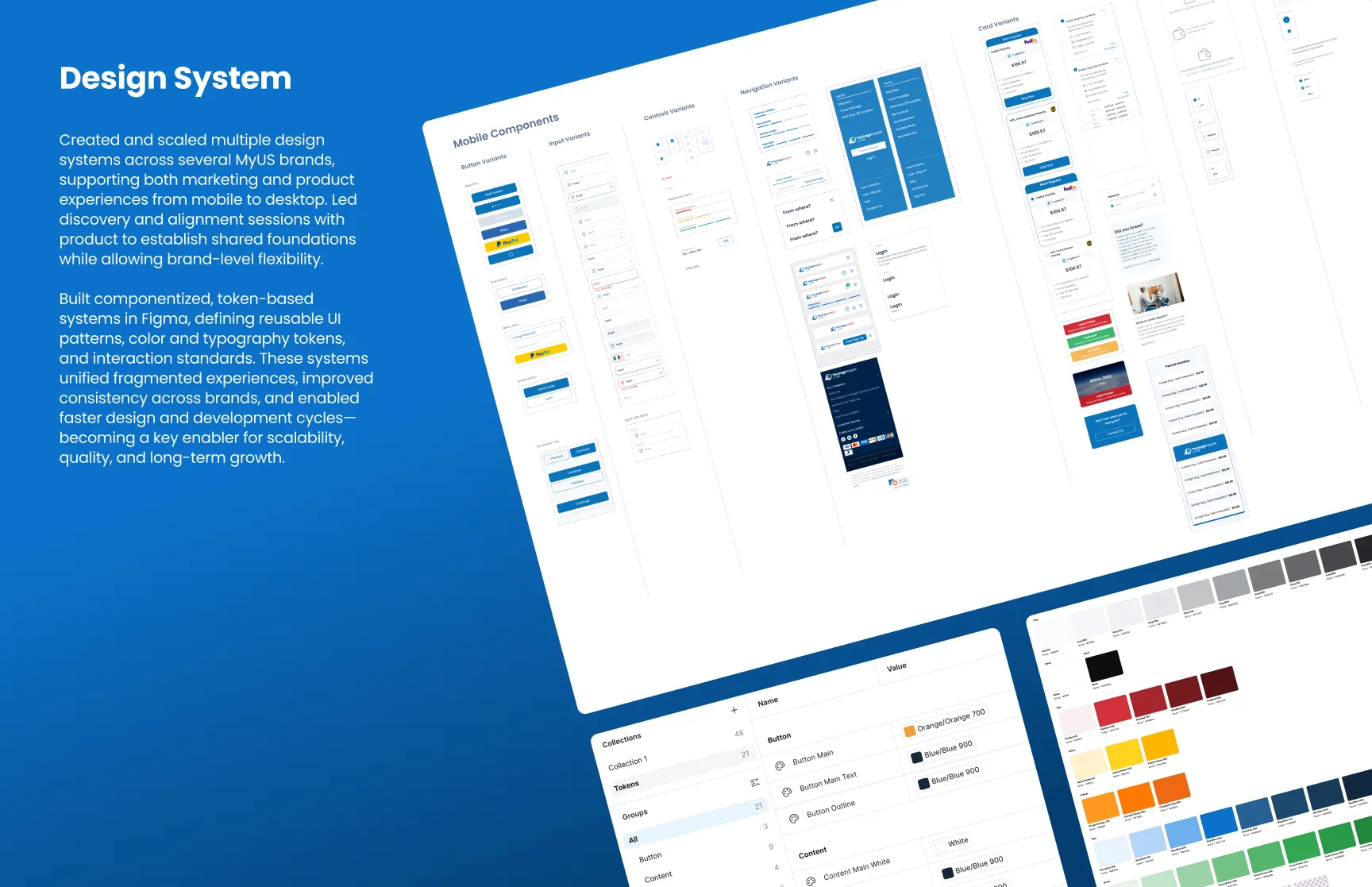
We created and scaled multiple design systems across the MyUS brands, covering both marketing and product experiences from mobile to desktop: shared foundations agreed with product, room for brand-level flexibility, and componentized, token-based systems in Figma with reusable UI patterns, color and typography tokens, and interaction standards.
The outcome
Higher engagement and stronger retention across the redesigned flows, and a platform that is more scalable and cohesive across its products and brands. The design systems unified fragmented experiences, improved consistency between brands, and shortened design and development cycles, becoming a key enabler for quality and long-term growth.
Skills and deliverables
- Product design
- UX and UI
- Design system
- Figma
- Landing pages
- SaaS